How to Insulate Your Attic in Belgium: Sequencing Your Renovation for the 2026 Energy Standards
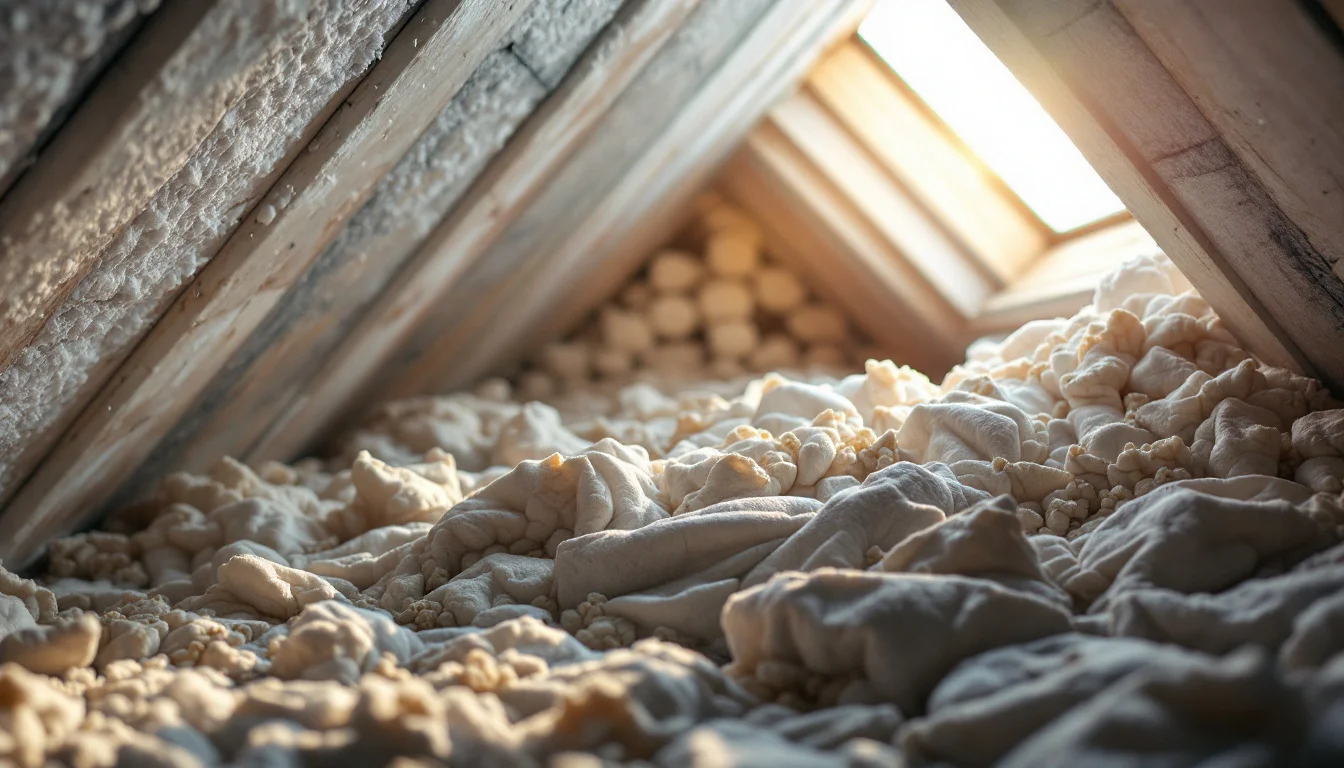
The revised Energy Performance of Buildings Directive (EU/2024/1275) officially entered into force on 28 May 2024, with a transposition deadline into national law of 29 May 2026. Belgian property owners therefore operate within an evolving energy renovation landscape as that deadline has now passed. Meeting these targets efficiently requires a "fabric-first" methodology. According to Facq, this established architectural strategy dictates that neutralising a building's primary heat-loss vulnerabilities must take precedence over investing in active technologies like solar arrays or advanced climate control. For traditional residential structures, the attic represents the largest structural weakness. Upgrading roof insulation serves as the fundamental first step in a logical renovation sequence. By securing the building envelope first, homeowners prevent the expensive technical missteps associated with improperly sized heating infrastructure, aligning practical property improvements directly with post-2026 energy directives.
Key Takeaways
- Regulatory alignment: The 29 May 2026 transposition deadline for the EU's Energy Performance of Buildings Directive sets a trajectory for new baseline efficiency standards across Belgian municipalities.
- Material benchmarks: Biobased materials such as wood fibre and cellulose wadding offer strong thermal resistance, generally featuring lambda (λ) coefficients between 0.038 and 0.042 W/m.K.
- Financial mapping: Highly localised regional programmes—MijnVerbouwPremie, RénovEnergie, and Renolution—offset capital costs that, according to Facq, typically range from €200 to €450 per square metre for energy renovation work.
Why Does the Attic Come First Under the 2026 Regulations?
The regulatory environment for Belgian housing is fundamentally driven by specific macro-goals outlined in the revised EPBD directive. For residential buildings, each European Union member state is required to adopt its own binding national trajectory. The primary objective is to cut the average primary energy use of the national residential building stock by 16% by 2030, with a subsequent reduction target of 20% to 22% by 2035. Crucially, the directive stipulates that a significant portion of this overall decrease must be achieved by prioritising the targeted renovation of the worst-performing buildings in the national housing stock.
Meeting this 16% primary energy reduction mandate by 2030 might appear structurally demanding for owners of older homes, but targeting the building envelope provides a direct solution. General estimates indicate that the roof can account for roughly 30% of a home's total heat loss depending on its age and design, making roof insulation widely classified as the highest-priority energy-renovation measure capable of yielding substantial total energy savings. Insulating a compromised attic can therefore deliver significant savings at the individual property level, ahead of addressing complex wall configurations or window replacements.
The Hierarchy of Thermal Loss
Understanding a property's structural vulnerabilities is critical for allocating renovation budgets efficiently. According to Facq, once the roof's primary vulnerability is addressed, the remaining envelope contributes to heat transfer in a descending order of severity:
- Exterior walls: Responsible for 20% to 25% of ongoing energy dissipation.
- Windows: Account for 10% to 15% of thermal loss, despite often being considered a popular early upgrade.
- Floors: Represent the lowest priority structural boundary, allowing only 7% to 10% of heat to escape.
Why Should You Insulate Before Upgrading Your Heating?
Homeowners frequently rush to install modern climate control systems in older buildings that still suffer from unaddressed thermal leaks. However, according to Facq, insulation work must always precede the sizing of the heating system.
Preventing Equipment Oversizing
A properly insulated house retains thermal energy significantly longer, inherently requiring substantially less active heating power to maintain a comfortable temperature baseline. If a homeowner installs a high-capacity heat pump or a modern condensing boiler before securing the attic, the installation technician must size the equipment to compensate for the uninsulated roof's heat loss. This miscalculation results in an oversized boiler that chronically wastes energy and inflates upfront capital costs. Once the roof is eventually insulated, that oversized heating unit will cycle inefficiently.
The Ventilation Imperative
While securing the attic envelope successfully prevents thermal energy from escaping, it fundamentally alters the building's internal airflow mechanics. Increasing structural airtightness eliminates the passive, unintended draughts that older homes historically rely on for ambient air exchange.
Because of this shift, Facq notes that ventilation renovation should be carried out at the exact same time as insulation work. Failing to implement proper mechanical ventilation in a highly sealed environment traps everyday interior humidity from cooking and bathing. In a well-sealed but poorly ventilated house, this trapped moisture inevitably condenses on colder surfaces, leading directly to systemic damp problems and hazardous mould proliferation.
How Do You Choose Materials Using the Lambda Coefficient?
Selecting the correct insulation material requires looking beyond basic commercial branding to evaluate verified thermal metrics. According to Facq, the primary technical indicator for evaluating any architectural insulation's performance is the lambda coefficient (λ).
Understanding Thermal Conductivity
The lambda coefficient mathematically measures a material's intrinsic thermal conductivity—essentially, its physical capacity to transfer heat from a warm interior to a cold exterior. When evaluating technical specification sheets, the rule for procurement is straightforward: the lower the lambda value, the better the material's insulating capacity. A low value indicates low thermal conductivity, meaning that less material thickness is required in the attic rafters to achieve energy retention goals.
Biobased Material Benchmarks
Facq highlights that biobased materials combine low thermal conductivity with necessary structural breathability. Two sustainable options provide technical benchmarks for modern attic renovations:
- Cellulose wadding: Offers thermal conductivity with λ values generally ranging from 0.038 to 0.042 W/m.K, depending on the application density.
- Wood fibre: Performs similarly well in dense roof applications, with λ values that can reach as low as 0.038 W/m.K.
How Can You Fund the Upgrade With Belgian Grants?
The financial landscape for energy renovation in Belgium is inherently fragmented, with structural grants organised entirely at the regional level. While this decentralised approach adds administrative complexity for property owners, securing these regional funds is absolutely essential for offsetting the heavy initial capital outlays required by the 2026 standards.
National Tax Incentives and Cost Baselines
Before applying for specific regional subsidies, property owners across the country can benefit from a broad federal tax mechanism. A reduced VAT rate of 6% can apply to renovation work in private homes depending on the property's age and usage, subject to strict administrative conditions such as professional installation and direct invoicing to the homeowner or tenant. Homeowners should verify current eligibility conditions with a qualified professional, as the applicable rules may evolve.
According to Facq, average energy-renovation costs generally range from €200 to €450 per square metre. When scaling up to an overall whole-house renovation, the average project cost sits at approximately €40,000, generally falling within a broader range of €20,000 to €60,000 depending on the property's size, accessibility, and roof type. Given unpredictable material price fluctuations, securing a strict 10% to 20% contingency margin in the initial project budget is recommended.
Regional Grant Structures
Each of Belgium's three administrative regions manages its own framework for distributing renovation capital, dictating distinct operational rules.
| Region | Scheme Name | Coverage Scope | Financial Mechanics |
|---|---|---|---|
| Wallonia | SPW Énergie – RénovEnergie | Insulation, heating, ventilation | Provides financial assistance that scales according to household income levels; a preliminary energy audit is often required. |
| Brussels | Bruxelles Environnement – Renolution | Insulation, heating, ventilation, joinery | Groups aid for both renovation and energy saving; can be combined directly with tax reductions. |
| Flanders | VEKA – MijnVerbouwPremie | Insulation, heat pumps, glazing | Centralises support metrics; eligible households may also access a regional energy loan, subject to evolving terms and conditions set by the regional authorities. |
Navigating these distinct regional authorities is a mandatory step in the planning phase. Homeowners must closely align their sequential strategy with the specific technical prerequisites of their local grant provider. As grant conditions, rates, and ceilings change regularly, always verify current terms directly with the relevant regional authority before committing to a project.
Frequently Asked Questions
Are holiday homes subject to the same strict EPBD requirements?
Based on the European Commission's regulatory framework, individual EU countries maintain operational flexibility regarding specific non-primary property types. Member states may actively exempt certain building categories from the strict EPBD renovation requirements. These permitted exemptions notably include historical buildings and holiday homes, meaning secondary properties situated in the Ardennes or along the coast might legally operate under different compliance timelines than urban primary residences. Whether and how Belgium applies these exemptions in its national transposition legislation will depend on choices made by the Belgian authorities.
What happens if I start insulation work without a preliminary audit?
While the physical installation of materials can technically proceed independently, securing financial assistance usually dictates strict procedural steps. For instance, accessing Wallonia's comprehensive RénovEnergie grants (administered by SPW Énergie) often requires a preliminary housing audit to validate the property's baseline performance metrics before any work begins. Failing to complete this assessment, or using an unregistered contractor, generally disqualifies the project from receiving regional funding. Homeowners should thoroughly verify their specific regional scheme's administrative prerequisites before finalising any contractor agreements.
Conclusion
Insulating the attic to meet post-2026 energy standards transcends mere regulatory compliance and mandatory utility management. It actively serves as a direct catalyst for property valuation in an eco-conscious real estate market. Securing the building envelope ultimately transforms an obligatory technical expense into a highly measurable, long-term financial asset.