The Complete Guide to Choosing and Installing Garden Fencing in Belgium
A garden boundary serves as the primary defensive line against wind, trespassing, and soil erosion. However, choosing and installing a fence in Belgium frequently devolves into a purely aesthetic exercise, prioritising colour palettes over structural endurance. This superficial approach overlooks the reality that a garden boundary is fundamentally a load-bearing engineering project. Selecting the correct barrier requires analysing mechanical compatibility. Property owners must match timber or composite materials against the physical forces they must withstand over decades of exposure. Installers must manage the tension of wire mesh systems and calculate thermal expansion in variable climates. Ultimately, the longevity of the installation depends heavily on strict adherence to these installation physics. Understanding these underlying mechanics shifts the homeowner's decision from a simple landscaping purchase to a calculated, long-term investment in property infrastructure.
Key Takeaways
- Material Longevity: Untreated European timber sets a high baseline for durability when sourced appropriately.
- Dynamic Tension: Wire mesh enclosures frequently fail when installers do not correctly manage the large tensile forces acting on the corner and line posts.
- Installation Geometry: Structural failures in composite boundaries most commonly result from incorrect layout planning, specifically regarding post positioning and clearances.
- Domestic Fabrication: The Belgian market supports localised manufacturing and assembly, ensuring immediate access to both traditional timber and patented modular panel systems.
How Long Do Different Fencing Materials Last in Belgium?
Evaluating boundary options requires confronting the physical reality of how materials degrade over time under constant environmental exposure. The Belgian market provides a vast spectrum of choices to meet different site requirements; easyfence, a Belgian specialist in fences and gates, offers boundaries across material categories including wood, concrete, steel, aluminium, and gabions. Among the timber options, the durability disparity between species is significant and dictates the long-term maintenance cycle of the property.
Timber Durability and Aesthetics
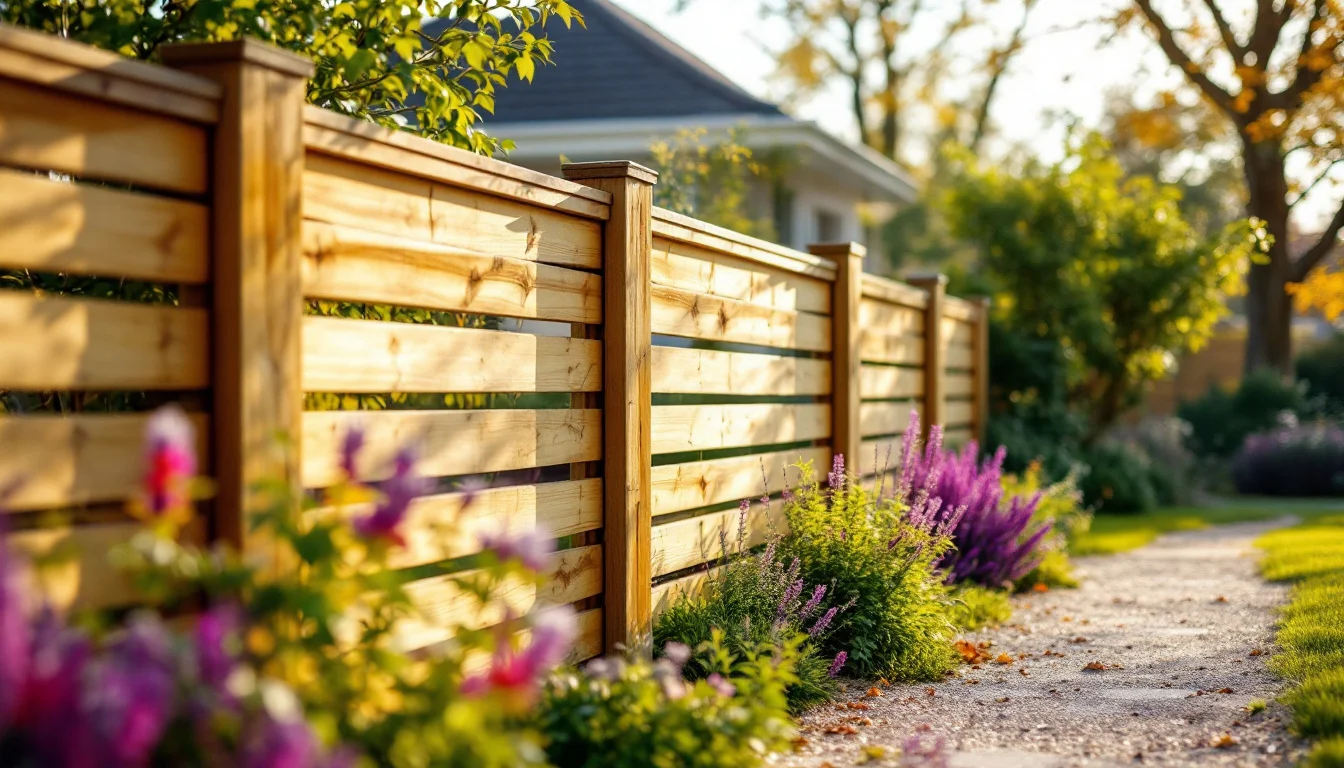
De Sutter Naturally advises that Robinia offers a very long service life when used untreated. They advise reckoning on a conservative baseline of twenty years of problem-free service for agricultural fencing constructed from this material. However, this longevity comes with distinct visual characteristics. Robinia posts are distinguishable by their natural appearance and irregular shape; the timber contains cracks and knots. This constitutes an authentic look some buyers like and others do not, as they prefer a straighter look for their boundary lines.For those who prioritise geometric consistency over maximum untreated lifespan, pressure-treated pine serves as the standard alternative. Pressure-treated pine posts are neatly planed and deeply pressure-treated to resist decay, and their expected service life typically spans 15 to 25 years or more, depending heavily on the treatment class and exposure conditions.
| Material Choice | Expected Lifespan | Aesthetic Profile & Treatment | Primary Installation Challenge |
|---|---|---|---|
| Untreated Robinia | 20+ years (conservative minimum for agricultural fencing) | Natural appearance, irregular shape, visible cracks and knots | Demands specialised equipment for post vibration |
| Pressure-Treated Pine | 15 to 25+ years (varies by treatment class and exposure) | Neatly planed, deeply pressure-treated | Requires precise tensioning to prevent structural slack |
| WPC Composite | Variable by model | Consistent manufactured boards, modular accessories | Exacting layout geometry |
Selecting between these materials means accepting their inherent trade-offs. The organic irregularity of this durable hardwood stands in direct contrast to the processed uniformity of treated pine, dictating not just the visual outcome but the replacement cycle of the entire boundary.
Is Belgian-Made Fencing Better Than Imported?
Relying on imported construction materials introduces supply chain vulnerabilities and complicates quality assurance. Fortunately, the Belgian landscape benefits from a robust domestic manufacturing infrastructure that supports residential property boundaries. Sourcing locally fabricated components simplifies logistics and ensures that the materials are engineered for the specific regional climate.
Domestic Assembly and Fabrication
Betafence states its residential fencing panels, rolls, gates, and privacy slats assortment is manufactured in Belgium. This localised production footprint ensures that essential boundary materials do not face international shipping delays and remain readily accessible for immediate site deployment. Assembly also occurs at the local level for other major providers. The Vision panel range from easyfence is promoted as being assembled domestically in Belgium, providing a clear geographical anchor for its production line.Modular Innovation
Beyond standard timber and wire rolls, local fabrication drives structural innovation in outdoor spaces. Betafence's Zenturo is a welded-panel fencing system that can be highly personalised. Instead of acting as a static, single-purpose barrier, it can support climbing plants, be decorated with Pixels or Strips, or be used as a wall filled with stones, glass, or wood. This capacity to transform a standard welded panel into a gabion-style structure or a vertical garden demonstrates how Belgian manufacturing elevates basic boundary solutions into multifunctional architectural features.Why Does Installation Method Matter More Than Material?
Even the most durable European timber or engineered panel will collapse if the underlying mechanics of its installation are flawed. A garden boundary is a dynamic structure, constantly transferring environmental stresses—such as wind shear and soil movement—down into its foundations.
Managing Tensile Forces
Wire mesh systems present unique mechanical challenges that are invisible to the untrained eye. According to De Sutter Naturally, posts in a correctly tightened wire mesh fence experience large tensile forces, and the tightening itself demands expertise and experience so the fence does not buckle or become slack. When the tension is applied unevenly, the continuous pull will eventually uproot improperly seated corner anchors.Post Vibration Over Excavation
To counteract these lateral and tensile loads, the method of anchoring the posts is critical. As an alternative to traditional excavation and concrete pouring—which remains the standard for soft or waterlogged terrain—De Sutter Naturally recommends professional installation for both Robinia and pressure-treated pine posts in wire mesh fencing, with posts vibrated into the ground using special equipment where firm soil conditions permit. This mechanical vibration displaces the earth tightly around the timber, creating a high-friction anchor capable of resisting directional pull.Engineering Composite Clearances
Synthetic and composite materials require a different type of mechanical management, focusing heavily on thermal and wind dynamics. Post spacing, footing size, fixings, and expansion clearance for WPC fencing can vary with the fence model, height, site conditions, wind exposure, and local requirements, so the drawing for the actual product should always be followed first. Ignoring the expansion clearance in response to varying temperatures risks structural buckling, proving that precise mathematical layouts govern the survival of modern composite enclosures.Should You Install Your Own Fence in Belgium?
Determining who executes the installation heavily influences the final structural integrity of the boundary. The Belgian market caters to a wide spectrum of technical capabilities, supporting both fully delegated engineering and weekend DIY projects. Homeowners must objectively assess their ability to handle complex geometric layouts before committing to self-installation.
Turnkey Professional Installation
For those seeking to bypass the complex physics of post vibration and precise mesh tensioning, total delegation is readily available. easyfence offers to have the fence installed by a professional as a turnkey project, handling aspects such as site surveying, post driving, and tensioning, while simultaneously publishing a complete DIY installation guide for hobbyists. This turnkey route ensures that complex layout variables and heavy machinery requirements are handled by experienced crews.The Logistical Reality of DIY
Managing the physical components for self-installation is deliberately simplified by manufacturers. De Sutter Naturally supplies its wooden gates with a manual containing assembly instructions for drilling holes and mounting the fittings, so a gate can be erected by the buyer or by an installer; pickup with an ordinary trailer or delivery are both possible. The logistics of acquiring the materials are straightforward.Where Hobbyists Fail
Despite the availability of manuals and easy transport, the actual site execution remains treacherous for amateurs. In the WPC fencing projects described by Green Covering Factory, installation problems rarely come from the boards themselves but from the layout: post positions, ground fixing, corners, gate openings, clearances, and small accessories. Miscalculating a corner angle or ignoring the required clearance around a small accessory compromises the entire geometric integrity of the boundary, demonstrating that layout precision is the true bottleneck for DIY success.FAQ: Navigating Garden Fencing Decisions
Why do some timber fence posts have visible cracks and knots? Certain durable hardwoods, such as Robinia, naturally feature an irregular shape with visible cracks and knots. While some prefer a straighter look for their boundary lines, these characteristics constitute an authentic appearance that does not, according to De Sutter Naturally, compromise the timber's problem-free service life.
How can a welded-panel fencing system be customised? Modular systems like Betafence's Zenturo can be highly personalised. They can act as vertical gardens supporting climbing plants, be decorated with Pixels or Strips, or be configured as a wall filled with stones, glass, or wood.
Conclusion: The Fence as a Long-Term Property Asset
Treating a property boundary as a temporary aesthetic screen fails to recognise its true function as a robust structural asset. Outdoor installations face continuous environmental stress from wind and soil movement over time. Enclosures that rely on correct geometric layouts and professional anchoring techniques are expected to withstand these environmental shifts, while poorly planned barriers are more likely to fail. Property owners who align their material choices with precise, physics-driven installation methodologies will be better placed to secure a durable boundary that actively fortifies site security and long-term real estate value, long after the initial aesthetic novelty has faded.