The 'Continuous Harvest' Windowsill: Engineering a Year-Round Indoor Herb Garden
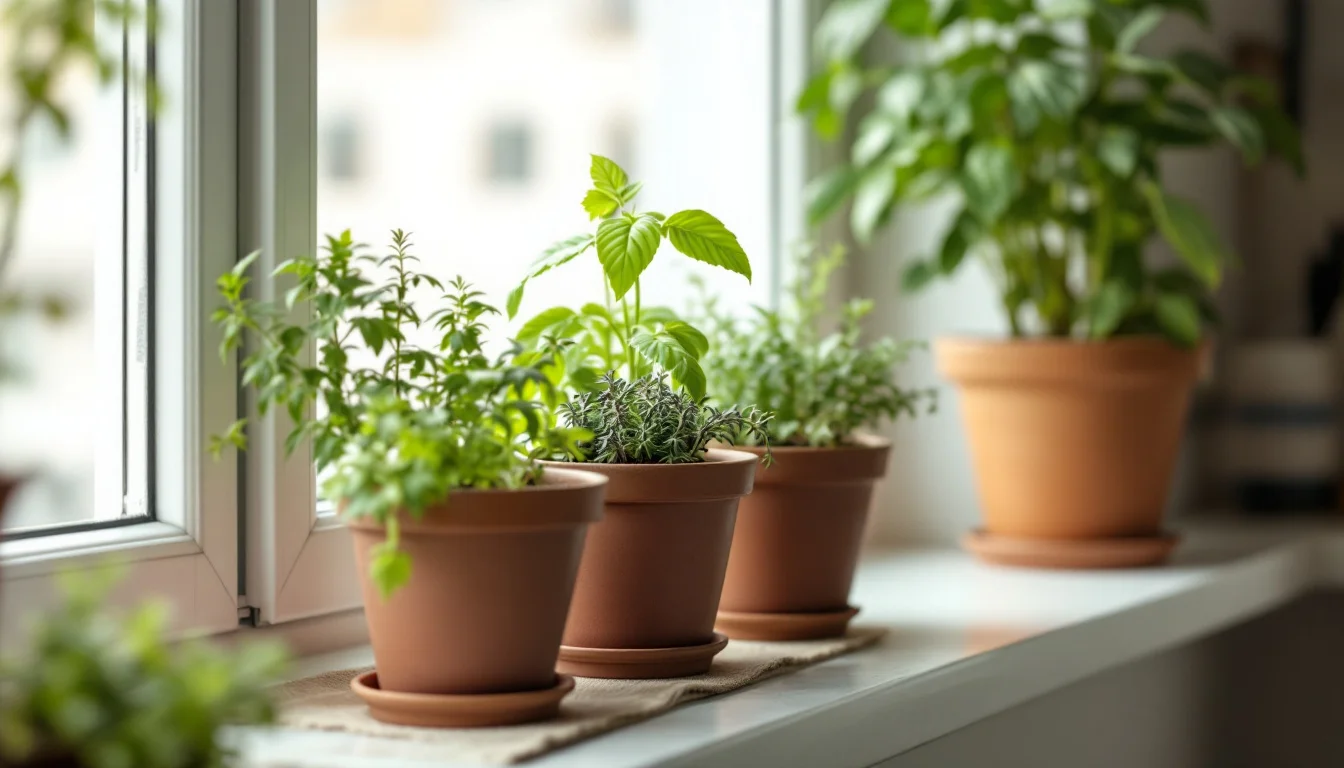
Kitchen windowsills are frequently treated as temporary holding zones for struggling herbs during the coldest months of the year. However, restricting indoor growing spaces to seasonal stopgaps wastes their functional potential. A windowsill herb garden can perform well nearly year-round, offering continuous yields rather than sporadic clippings. Even during the peak summer months, maintaining a dedicated indoor herb garden remains highly beneficial for cooking with fresh, immediate ingredients without stepping outside, according to Earth Food and Fire's 'Growing a Windowsill Herb Garden'.
Transitioning from basic, occasional plant care to a deliberate "continuous harvest" strategy requires treating the windowsill as a managed agricultural microclimate. This approach relies heavily on categorizing specific plant varieties by their unique harvest speeds and deliberately manipulating indoor environmental variables. By optimizing container physics, light exposure, and succession planting schedules, a standard kitchen ledge can be engineered into a highly reliable, perpetual source of culinary ingredients.
Key Takeaways
- Baseline Light Requirements: Most culinary herbs need 5 to 6 hours of solid sunlight from a south or southwest-facing window, though rosemary and thyme can get by with 4 to 5 hours at reduced vigor, and LED installations offer a fallback for shaded kitchens.
- Drainage Dynamics: Indoor pots require a careful balance; they dry out faster on the surface but risk waterlogging at the roots, making drip trays and unobstructed drainage holes essential.
- Rapid Yield Tactics: Specialized speedy-veg cultivars can be harvested as tender seedlings, bypassing traditional multi-week growth cycles.
- Winter Preservation: Hardy perennials bypass harsh cold climates when dug up from the outdoor garden and transitioned indoors, ensuring uninterrupted cold-weather harvests.
How Do You Optimize Indoor Climate Physics for Herbs?
The physical environment of a kitchen windowsill presents a unique set of microclimate variables that differ drastically from outdoor soil beds. Successfully managing these variables requires a structural approach to lighting and container architecture, ensuring roots have the precise air, space, and moisture they require.
How Much Light Do Windowsill Herbs Actually Need?
Lack of sunlight remains the most common point of failure in windowsill herb gardens. To establish a baseline for healthy, continuous growth, growers must choose a south or southwest-facing window capable of receiving at least 5 to 6 hours of solid sunlight per day, as outlined by Earth Food and Fire's 'Growing a Windowsill Herb Garden'.
When architectural constraints prevent access to a south-facing window, artificial lighting serves as an easy, highly effective alternative to provide the light the plants require. Small LED-style lights are no longer prohibitively expensive and can be efficiently mounted under a hanging kitchen cabinet or directly within the window frame to simulate optimal daylight hours.
How Deep Does a Herb Pot Need to Be?
Proper container selection dictates the health of the root system. Growers must choose a pot or container that is at least 6 inches deep. This specific depth is critical because it allows plenty of space for the roots to develop while still ensuring the container has unobstructed holes to provide necessary drainage.
Drainage is a strict requirement because herbs fundamentally do not tolerate having "wet feet." To manage this, herb pots should be kept on drip trays, and any excess water that collects in them should be promptly removed to prevent root rot.
This creates an interesting paradox regarding indoor moisture management: while standing water is dangerous at the bottom of the pot, the ambient environment of a heated house means that indoor pots can dry out rapidly during the winter months. Consequently, regular, measured watering is required to prevent dry soil, treating the container as an active system where moisture must flow through rather than sit stagnant.
The Windowsill Yield Matrix: Matching Herbs to Your Indoor Specs
Not all herbs respond to indoor environments in the same way. To guarantee a continuous harvest, growers must align their plant selection with the physical constraints of their specific kitchen space. Using a yield matrix, practitioners can systematically categorize culinary herbs based on their spatial demands, light tolerances, and growth velocities.
| Herb Category | Minimum Light Requirement | Minimum Container Depth | Time to Initial Harvest |
|---|---|---|---|
| Fennel | - | 12+ inches | Standard growth cycle |
| Basil (Varieties) | - | - | 1 to 2 weeks (Microgreens) to Months |
| Rosemary & Thyme | 4 to 5 hours (baseline) | - | Immediate (if overwintered) |
| Speedy Veg Rocket | - | - | Approximately 1 week |
How Do Container Depth and Light Impact Placement?
Container depth serves as a hard limiting factor for certain species. While standard herbs adapt well to the 6-inch baseline, deeper-rooted plants require specialized housing. For example, fennel is notoriously deep-rooted and strictly requires a container at least 12 inches deep. This container must be filled with light soil and some added gravel to facilitate the heavy drainage the plant demands, according to Kitchen Garden's 'Growing Herbs In The City'.
Light requirements also dictate spatial placement along the window. While peak production generally requires 6 or more hours of sun, thyme and rosemary can get away with 4 to 5 hours of sunlight a day. However, under these lower light conditions, they will not produce as vigorously. Growers should therefore reserve the center, highest-light sections of the windowsill for high-demand plants, while pushing hardy herbs to the slightly shadier edges.
The 'Speedy Veg' Tactic: Harvesting in Days, Not Weeks
For culinary enthusiasts looking to drastically accelerate their yields, treating specific herbs as microgreens bypasses the traditional wait time associated with indoor gardening. This rapid-turnaround methodology requires selecting specific cultivars bred for aggressive early growth and vibrant foliage.
Which Cultivars Offer the Fastest Yields?
According to Learning with Experts' 'My Top Ten Herbs To Grow In Pots And On The Windowsill', utilizing Speedy Veg Rocket Victoria is a highly successful way to achieve a mild, mustardy rocket flavor directly on the windowsill. These tender seedlings can be harvested in just a week or so.
Similarly, specialized seedling herbs such as Basil Dark Opal—a purple-leaved basil variety—are suited for this accelerated technique. When grown on a sunny windowsill, the intense light exposure helps develop the distinct foliage color rapidly. When treated as a speedy veg, this basil is ready to use in about one to two weeks rather than waiting for full maturity, allowing for quicker culinary application.
How Do You Structure Succession Sowing?
To ensure this rapid harvest does not result in an empty windowsill, growers must implement succession sowing. For those who want to maintain a constant, heavy supply of tasty rocket leaves, the recommended approach is to deliberately sow a new pot every four to six weeks on a sunny windowsill. Staggering the planting phases in this way maintains an unbroken chain of fresh ingredients.
Overwintering and Stubborn Seeds: Advanced Indoor Tactics
While speedy-veg tactics focus on rapid turnover, securing a truly continuous year-round harvest also requires long-term planning for slow-germinating staples and woody perennials. Mastering these advanced indoor tactics ensures the windowsill remains highly productive even as outdoor temperatures plummet.
How Can Hardy Perennials Be Overwintered?
Certain Mediterranean herbs struggle to survive freezing outdoor climates but thrive when moved inside. Because rosemary and thyme can have a hard time surviving the harshest, coldest winter zones of North America, growers can deploy a highly effective overwintering strategy. These mature plants can be actively dug up from the outdoor garden and placed in the window to overwinter indoors. This transition allows fresh herbs to be harvested all winter long, completely avoiding the tedious process of starting the herbs from scratch in the spring.
To guarantee the success of this relocation, soil composition must be carefully adjusted. Thyme and rosemary are both hardy herbs very well suited to a windowsill garden, but they possess strict root requirements. They prefer well-draining, loose sandy soils. Consequently, the potting mix used for indoor overwintering should be of high quality and specifically formulated to be loose, completely avoiding heavy, clay-like textures that retain too much moisture.
What Are the Best Ways to Force Germination?
For standard culinary herbs grown from seed, specific environmental triggers are necessary to force germination.
- Managing Light Exposure: Chives can be grown successfully in pots either indoors or out, but their seeds require specific handling. Chive seeds must be completely covered with compost when sown to help maintain the consistent moisture required for germination.
- Accelerating Slow Starters: Parsley seed is notoriously slow to germinate, frequently taking up to 4 weeks to show progress. To hack this timeline, Kitchen Garden's 'Growing Herbs In The City' notes that pre-soaking the seeds in warm, clear water for 12 to 24 hours before potting them indoors can significantly help initiate the germination process.
FAQ: Troubleshooting Your Indoor Herb Garden
What should I look for when purchasing an indoor herb garden kit?
For beginners looking to bypass the complexities of soil selection and container matching, purchasing a herb garden kit is described as the easiest and lowest-cost way to start growing herbs indoors. When evaluating a kit, ensure it is fully comprehensive; the container or pots, the exact soil or potting medium, the seeds, and detailed instructions should all be included in the package, according to Earth Food and Fire's 'Growing a Windowsill Herb Garden'.
Should I start basil from seeds or buy a starter plant for my windowsill?
The choice depends entirely on your desired timeline. Buying a small baby plant at a nursery and transplanting it into a larger pot on your windowsill allows you to begin harvesting right away. Conversely, growing standard basil from seed takes at least three to four weeks before any leaves have developed enough to be safely harvested for cooking.
Conclusion: The Kitchen of the Future is Hyper-Local
The evolution of the windowsill from a decorative afterthought to a highly engineered continuous harvest zone points toward a broader shift in culinary lifestyle. As small-scale indoor horticulture becomes more systematic, the integration of inexpensive, specialized LED lighting and precise soil management transforms even the most shaded, urban kitchen into a hyper-local greenhouse. The ongoing refinement of speedy-veg cultivars and succession planting techniques suggests that reliance on packaged, heavily transported supermarket herbs can be reduced with immediate, counter-to-plate harvesting.